The Cialdini Method
Gain deep mastery of the 7 Principles, with a credential Dr. Cialdini signs, for your own practice and as a foundation for teaching influence science.
See the certificationStudents can recite the material perfectly and still not apply any of it.
Every educator who teaches persuasion meets the same gap: knowing a principle is not using it. The Institute supports both halves, your teaching and your own practice in front of a room, with the original research behind each principle.

Students test a claim by asking where it came from. Here the answer is a published study, which changes how the material lands.
01
Engagement is not a personality trait of a cohort. Liking and Unity describe the conditions under which a group decides to take part.
02
Students grant attention before they grant belief. Authority and Social Proof are what they are weighing in the first sessions.
03
Access the original research behind the seven principles: the actual studies, for teaching and for citation.
04
The distinction is the hardest part of this material to teach well. The Institute's framing makes the ethical line explicit rather than implied.
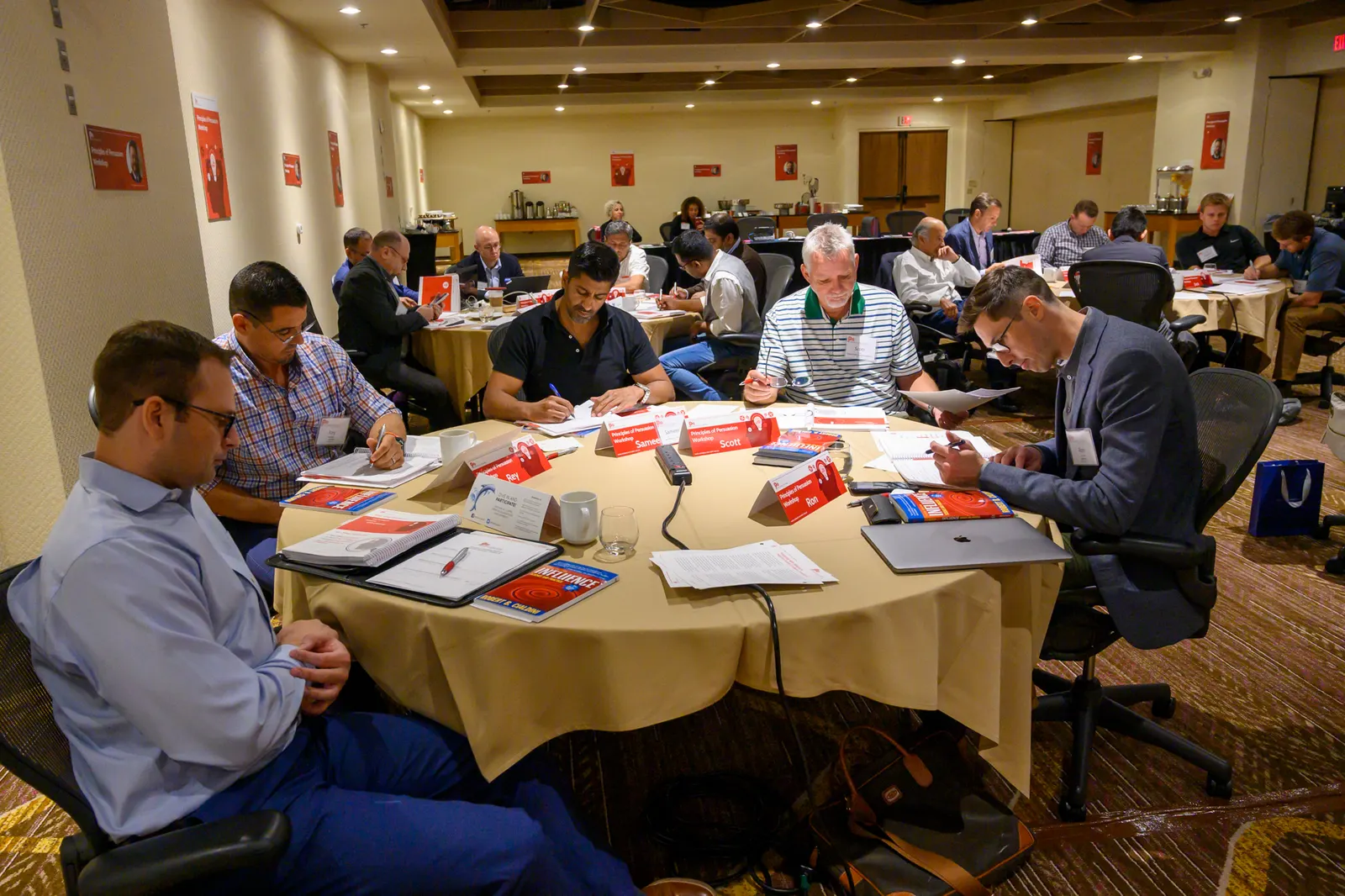
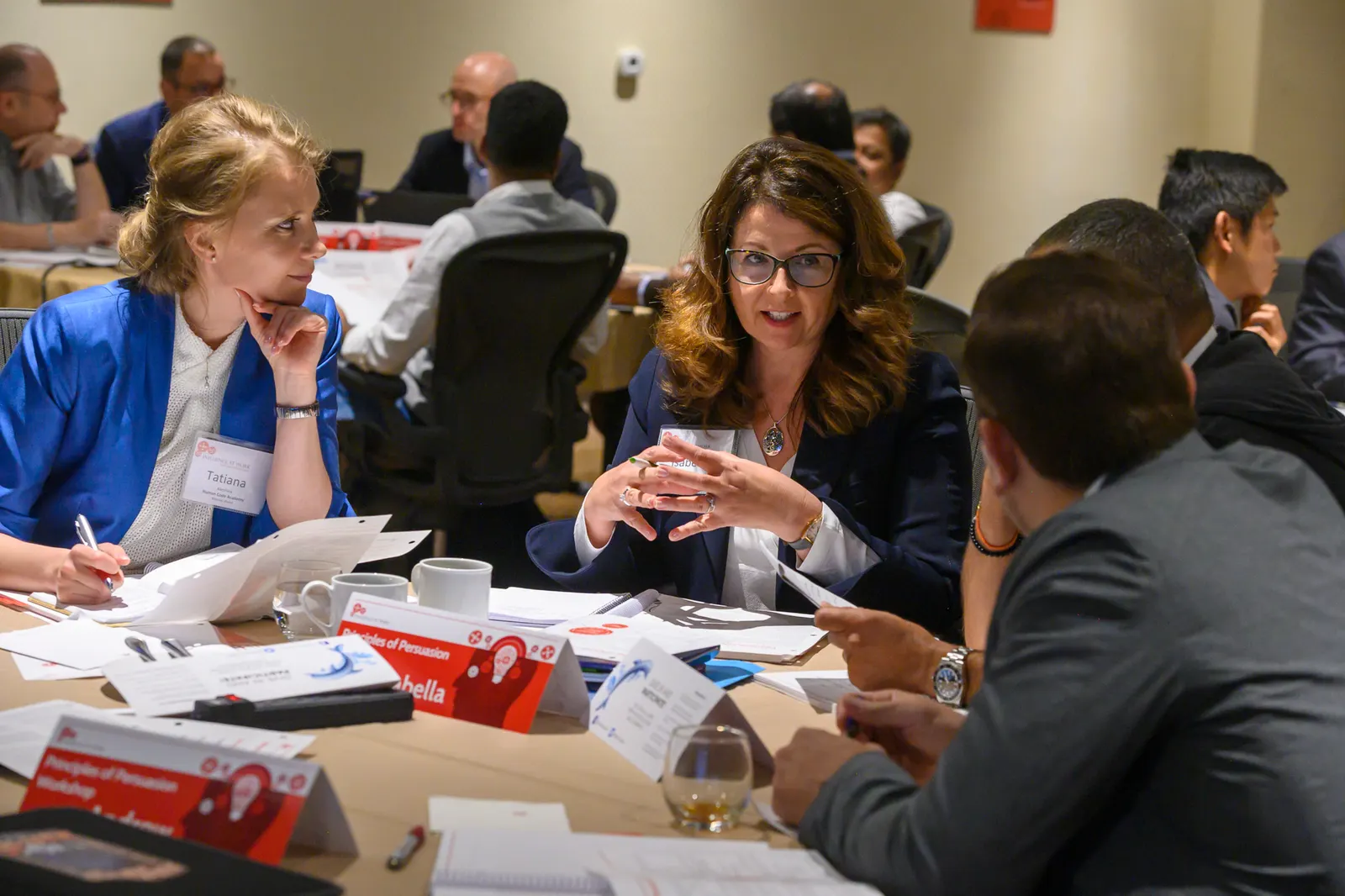
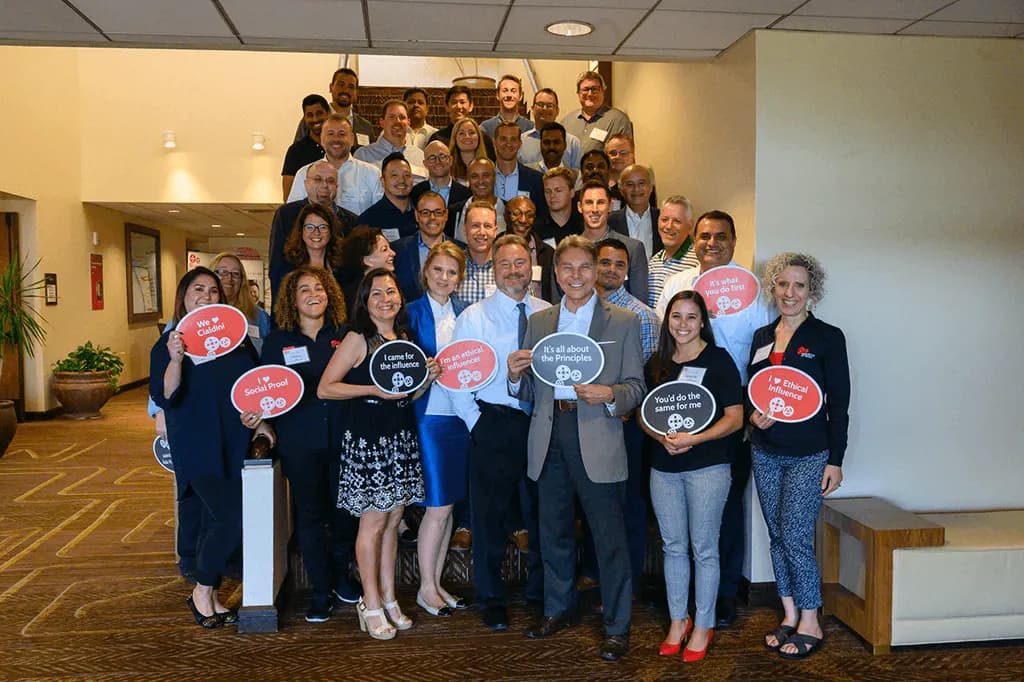
The POP Workshop is two days of hands-on work at round tables. Participants work through each principle together and practice it on situations from their own work.
Start with the texts you assign; add the credential when you want your own practice to carry the same weight.
Gain deep mastery of the 7 Principles, with a credential Dr. Cialdini signs, for your own practice and as a foundation for teaching influence science.
See the certificationInfluence and Pre-Suasion are essential texts for any course on persuasion, social psychology, marketing, or behavioral economics.
Browse BooksCourse materials, the underlying studies, and a certification route for faculty. Tell us what you teach and we will point you at the right one.